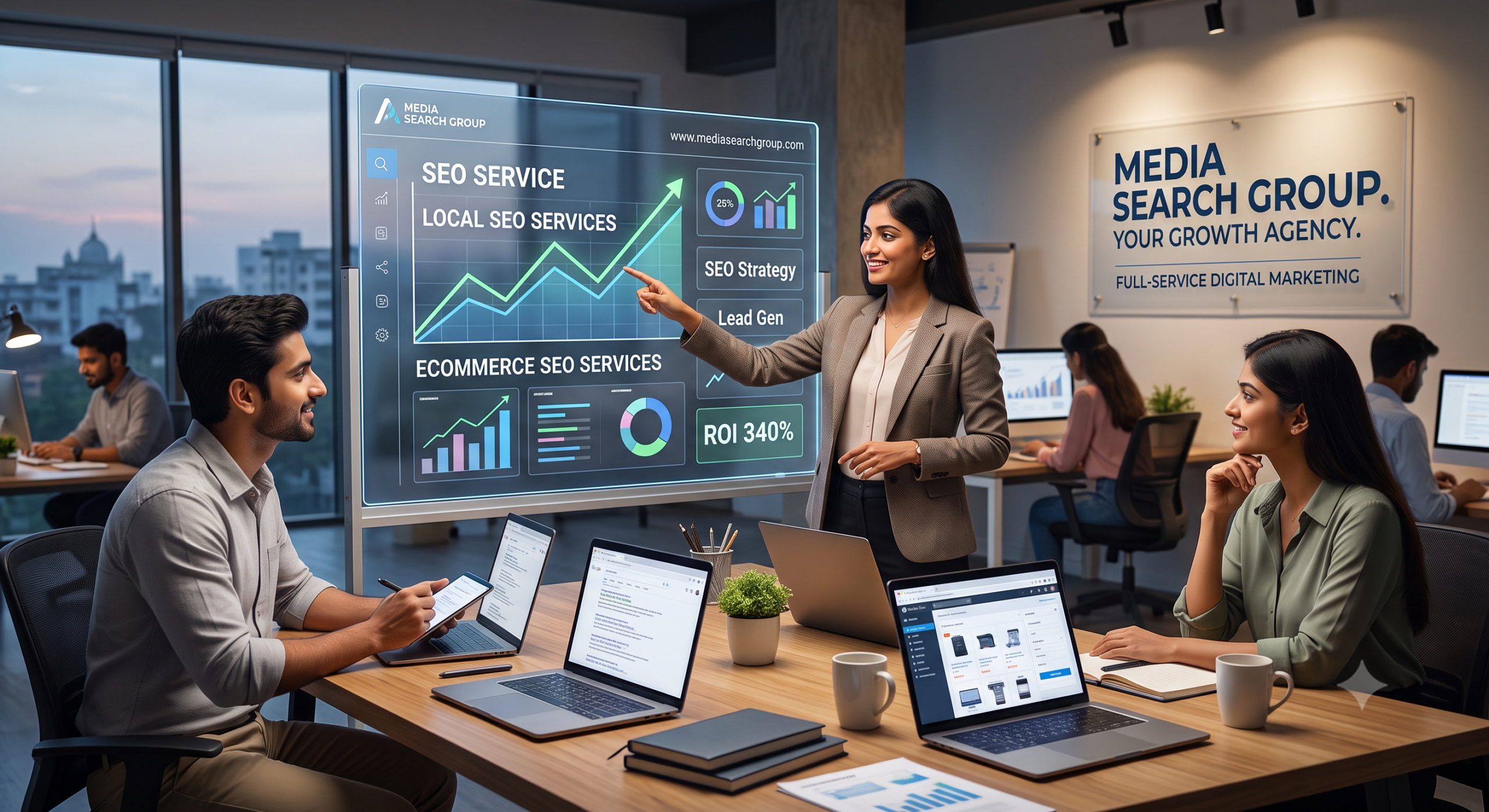
In a competitive online marketplace, simply having a website is no longer enough to attract customers and grow a business. Millions of websites compete for attention every day, while customers have more choices, higher expectations, and access to information within seconds.
Whether someone is searching for a local service, comparing software solutions, researching a product, or looking for the best online store, their buying journey often begins somewhere online.
For this reason, businesses need more than individual marketing activities. They need a clear strategy that connects visibility, audience engagement, lead generation, customer acquisition, and long-term growth.
Working with the right digital marketing agency can help businesses bring these different elements together. From search engine optimization and content creation to paid advertising, social media, ecommerce growth, and conversion optimization, an integrated approach can help companies create a stronger and more measurable digital presence.
This article explores how businesses can build a more effective online growth strategy and why combining multiple marketing channels often produces better long-term results.
The Modern Customer Journey Is More Complex Than Ever
The path from discovery to purchase is rarely straightforward.
A customer may first find a business through an online search. Later, they might visit the website, read a few articles, compare prices, check social media, look at customer reviews, and leave without taking action.
A few days later, they may see an advertisement for the same brand, return to the website, and finally make a purchase.
This journey involves multiple digital touchpoints.
That is why businesses should avoid looking at SEO, social media, PPC, content, and website optimization as completely separate activities. Each channel can influence the customer’s decision at a different stage.
For example:
- Search marketing can capture existing demand.
- Content can answer questions and build confidence.
- Social media can improve awareness and engagement.
- Paid advertising can reach targeted audiences quickly.
- Email marketing can nurture potential customers.
- Conversion optimization can improve website performance.
- Analytics can reveal what is working and where improvements are needed.
When these activities support one another, businesses can create a more consistent customer experience.
Building a Strong Foundation Before Scaling Marketing
Many businesses make the mistake of investing heavily in traffic generation before ensuring that their digital foundation is ready.
More traffic will not necessarily produce better results if the website is slow, confusing, difficult to navigate, or poorly optimized for conversions.
Before expanding marketing efforts, businesses should evaluate several important areas.
Website Performance
A website should load efficiently and provide a smooth experience across desktop and mobile devices.
Visitors should be able to quickly understand:
- What the business offers
- Who the products or services are for
- Why the company is worth considering
- What action they should take next
Clear navigation, useful information, visible calls to action, and strong trust signals can make a significant difference.
Audience Understanding
Marketing becomes much more effective when businesses understand their customers.
Instead of targeting everyone, companies should identify their ideal audience and study their needs, challenges, interests, and purchasing behavior.
Important questions include:
- What problems are customers trying to solve?
- What words do they use when searching online?
- What concerns do they have before buying?
- Which alternatives are they comparing?
- What motivates them to choose one brand over another?
The answers can guide content creation, advertising messages, keyword research, landing page development, and overall marketing strategy.
Clear Goals
A business should also know what success looks like.
Possible goals may include increasing online sales, generating qualified leads, improving local visibility, attracting repeat customers, or entering a new market.
Without clear goals, marketing teams may focus on numbers that look impressive but do not contribute directly to business growth.
Search Visibility Creates Opportunities for Growth
Search engines continue to play a major role in connecting businesses with potential customers.
When people have a problem or need, they often search for information before making a decision.
Someone may search for:
- A service provider in their area
- The best solution for a business problem
- Product comparisons
- Pricing information
- Reviews
- How-to guides
- Specific products
This creates an opportunity for businesses to become visible at relevant moments.
Professional seo services can help improve a website’s ability to compete for valuable searches through a combination of technical improvements, content optimization, keyword targeting, website structure, authority building, and ongoing analysis.
However, effective SEO is not about placing the same keyword repeatedly throughout a page.
Search engines and users both expect useful, relevant information.
A better approach is to understand the topic, search intent, and audience behind a query. Businesses should create pages that genuinely help visitors find answers or make decisions.
Content Should Support the Entire Buying Journey
Content marketing is often associated with publishing blog articles, but its role is much broader.
Useful content can support customers before, during, and after a purchase.
At the awareness stage, customers may need educational information. They may not yet know which product or service is right for them.
At the consideration stage, they may be comparing solutions and looking for evidence, features, benefits, or examples.
At the decision stage, they may want pricing details, reviews, testimonials, case studies, demonstrations, or answers to final questions.
Businesses can create different forms of content for these needs.
Examples include:
- Educational blog posts
- Comprehensive guides
- Product pages
- Service pages
- Comparison pages
- Case studies
- FAQs
- Videos
- Industry insights
- Customer stories
- Buying guides
The key is relevance.
Publishing a large number of articles without understanding customer intent can consume time without delivering meaningful results.
A focused content strategy should connect each piece of content with a specific audience need or business objective.
Why Local Businesses Need a Different Visibility Strategy
Businesses that serve specific cities, regions, or neighborhoods face a different type of online competition.
A local customer usually has strong intent.
For example, a person searching for a nearby professional, restaurant, repair service, clinic, or store may be ready to take action soon.
This makes local search visibility particularly valuable.
A strong local strategy can involve improving location-specific website pages, maintaining accurate business information, strengthening online reputation, earning customer reviews, and creating relevant local content.
Businesses can use local seo services to improve their chances of appearing when customers search for relevant products or services in their target areas.
Consistency is important.
If business information differs across websites, directories, maps, and other platforms, it can create confusion for customers and search engines.
Local visibility should therefore be managed as part of a broader digital presence rather than as an isolated task.
Paid Advertising Can Deliver Faster Insights
Organic marketing often takes time to build momentum.
Paid advertising can help businesses reach specific audiences more quickly.
Search ads can target users actively looking for products or services. Social advertising can introduce brands to new audiences based on relevant targeting options. Remarketing can help businesses reconnect with people who have already interacted with their website.
But successful PPC campaigns require more than launching advertisements.
Campaign performance depends on several factors:
- Targeting accuracy
- Search intent
- Ad relevance
- Budget allocation
- Landing page quality
- Conversion tracking
- Audience segmentation
- Testing and optimization
One of the biggest advantages of paid marketing is the ability to learn quickly.
Businesses can identify which messages generate engagement, which keywords drive qualified leads, and which landing pages produce better conversions.
These insights can also support other channels.
For example, high-performing PPC keywords may reveal opportunities for SEO content. Common questions from advertising campaigns may inspire new landing pages or blog topics.
This is another reason integrated marketing is more effective than operating every channel independently.
Social Media Can Strengthen Brand Relationships
Customers do not always search for a business when they first discover it.
Sometimes they discover brands through social media content, recommendations, videos, influencers, communities, or shared posts.
Social platforms can help businesses build familiarity over time.
Instead of using every platform in the same way, companies should consider where their target audience is most active and what type of content performs naturally in that environment.
A successful social strategy may include:
- Educational posts
- Short-form videos
- Product demonstrations
- Customer stories
- Behind-the-scenes content
- Industry insights
- Interactive content
- User-generated content
- Promotional campaigns
The strongest social media programs often balance brand-building and direct-response objectives.
Not every post needs to generate an immediate sale. Some content can build awareness and trust that contributes to future conversions.
Ecommerce Businesses Must Optimize Beyond Product Pages
Ecommerce growth requires attention to both marketing and user experience.
An online store may have excellent products but still struggle if customers cannot easily find them through search or navigate the website efficiently.
A comprehensive ecommerce seo strategy can address important areas such as category-page optimization, product discoverability, internal linking, site architecture, technical SEO, duplicate-content issues, structured information, and search intent.
But visibility is only one part of the equation.
Once customers arrive, the store should make purchasing as easy as possible.
Businesses should review:
- Product information
- Product images
- Reviews
- Pricing clarity
- Shipping details
- Return policies
- Mobile usability
- Site speed
- Checkout process
Every unnecessary obstacle can increase the likelihood of cart abandonment.
Ecommerce businesses should therefore connect SEO and marketing efforts with conversion improvements.
Driving thousands of visitors to an online store is valuable only when the website gives those visitors a compelling reason to buy.
Data Should Guide Decisions, Not Just Reports
Digital marketing generates a large amount of data.
Businesses can monitor traffic, rankings, clicks, impressions, engagement, leads, sales, advertising costs, conversion rates, and more.
The challenge is deciding which numbers deserve attention.
For example, an increase in website traffic may look positive. But if that traffic does not generate leads, sales, or engagement, the business needs to investigate why.
Marketing reports should connect activity with outcomes.
Useful business-focused metrics may include:
- Organic leads
- Organic revenue
- Cost per acquisition
- Conversion rate
- Qualified lead volume
- Customer acquisition cost
- Return on ad spend
- Customer lifetime value
- Revenue by channel
A strong digital marketing agency should use data to guide decisions and identify opportunities rather than simply presenting a collection of numbers at the end of each month.
The purpose of analytics is to improve future performance.
How Marketing Channels Can Work Together
The real strength of digital marketing comes from integration.
Consider how one channel can support another.
SEO research identifies what customers search for. Those insights can guide content topics.
Content can improve organic visibility and provide useful material for email and social campaigns.
Paid advertising can test messaging and identify high-converting search terms.
Conversion data can reveal which pages or offers perform best.
Customer questions collected through sales and support teams can become new content opportunities.
Social engagement can reveal emerging audience interests.
When these insights are shared across the marketing strategy, businesses can make better decisions.
Final Thoughts: Digital Growth Requires Strategy and Consistency
There is no single tactic that guarantees long-term online success.
Search algorithms change. Advertising costs fluctuate. Customer behavior evolves. New technologies create new opportunities and challenges.
Businesses need a flexible strategy that can adapt.
SEO can create sustainable visibility. Content can establish authority and answer customer questions. PPC can generate immediate opportunities. Social media can strengthen awareness and engagement. Local search can connect businesses with nearby customers. Ecommerce optimization can improve product discoverability. CRO can turn more visitors into customers.
When managed together, these activities can create a stronger foundation for growth.
The value of working with a digital marketing agency lies not only in accessing individual services. The real value comes from developing a coordinated strategy where every marketing activity has a purpose and contributes to broader business goals.
For startups, small and medium-sized businesses, ecommerce brands, entrepreneurs, and marketing managers, sustainable growth begins with understanding the customer, choosing the right channels, measuring meaningful outcomes, and continuously improving the experience.
Digital marketing is most effective when it is not treated as a collection of separate tasks.
It works best as a connected growth system—one that helps businesses become easier to find, more relevant to their audience, more persuasive online, and better equipped to turn attention into lasting customer relationships.
Leave a Reply