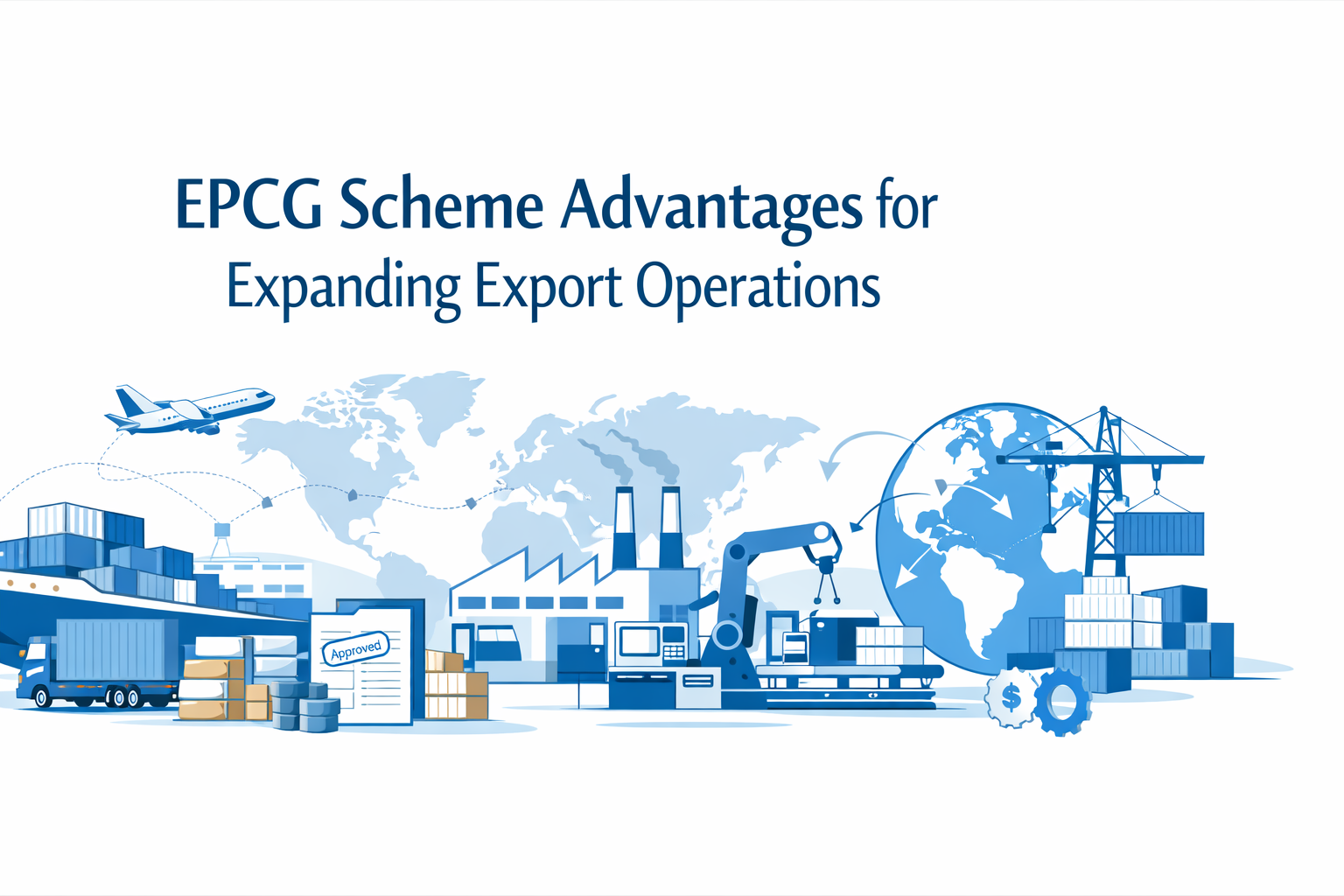
India’s export sector plays a crucial role in driving economic development, creating employment opportunities, and strengthening the country’s position in global markets. To support exporters and manufacturers, the government has introduced several incentive programs that help reduce costs and improve international competitiveness. Among the most beneficial export promotion initiatives are the EPCG Scheme and Advance License.
Both schemes are designed to encourage exports by reducing the financial burden associated with importing machinery, equipment, and raw materials. While they serve different purposes, they share a common objective of making Indian businesses more competitive in global trade. Understanding how these schemes work can help exporters maximize benefits and improve operational efficiency.
Understanding the EPCG Scheme
The EPCG Scheme (Export Promotion Capital Goods Scheme) allows businesses to import capital goods required for manufacturing, production, or service delivery at reduced or zero customs duty. In return, the importer must fulfill a specified export obligation within a defined period.
Capital goods under the EPCG Scheme may include machinery, equipment, tools, and technology that contribute to improving production capacity and product quality. The scheme is particularly beneficial for businesses looking to modernize their facilities without incurring high import costs.
For example, a textile manufacturer planning to import advanced weaving machines can utilize the EPCG Scheme to reduce duty expenses while increasing production efficiency and export potential.
What is an Advance License?
An Advance License, commonly referred to as Advance Authorisation, allows businesses to import raw materials, components, consumables, and inputs required for manufacturing export products without paying customs duties.
The objective is to ensure that exporters can access quality inputs at competitive prices, thereby reducing production costs and improving profitability in international markets.
For instance, a company manufacturing engineering goods for export may import specialized components under an Advance License and use them in the production process before exporting the finished products.
This mechanism helps exporters maintain competitive pricing while meeting international quality standards.
Key Benefits of the EPCG Scheme
The EPCG Scheme provides significant advantages to manufacturers and exporters seeking long-term growth.
Reduced Capital Investment Costs
Importing advanced machinery often requires substantial financial investment.
- The EPCG Scheme helps businesses reduce customs duty liabilities on imported capital goods, making modernization projects more affordable and financially viable.
- Lower acquisition costs enable companies to invest additional resources in product development, workforce training, and market expansion activities.
Improved Production Efficiency
Modern equipment can significantly enhance operational performance.
- Businesses that upgrade their manufacturing infrastructure often experience higher productivity, improved quality control, and reduced production downtime.
- Enhanced efficiency allows exporters to meet larger international orders while maintaining consistent product standards.
Increased Export Competitiveness
Global markets demand quality, innovation, and cost efficiency.
- Access to advanced technology through the EPCG Scheme enables businesses to produce export-ready goods that compete effectively with international suppliers.
Advantages of Advance License for Exporters
The Advance License scheme offers valuable support to businesses that depend on imported inputs for export production.
Lower Production Costs
Import duties can significantly increase manufacturing expenses.
- Advance License allows eligible businesses to import raw materials without paying customs duties, helping reduce overall production costs and improve profit margins.
- Lower input costs enable exporters to offer more competitive pricing in international markets without compromising product quality.
Better Access to Global Supply Chains
Many industries rely on imported materials that may not be readily available domestically.
- The scheme provides manufacturers with access to specialized inputs, helping them meet customer specifications and international quality requirements.
Enhanced Cash Flow Management
Duty exemptions create financial flexibility.
- Businesses can allocate resources toward production expansion, research, and export marketing instead of locking funds into import-related tax payments.
How EPCG Scheme and Advance License Work Together
Although the schemes address different aspects of the export process, they can complement each other effectively.
The EPCG Scheme focuses on importing capital goods such as machinery and equipment, while Advance License supports the import of raw materials and production inputs. Businesses engaged in export manufacturing can often benefit from both schemes simultaneously.
For example, a pharmaceutical company may import advanced manufacturing equipment under the EPCG Scheme and source active ingredients through an Advance License. This combination helps reduce both capital expenditure and production costs while supporting export growth.
By strategically utilizing both schemes, businesses can create a more efficient and cost-effective export ecosystem.
Important Compliance Requirements
To continue enjoying benefits under these schemes, businesses must comply with regulatory requirements.
Export Obligation Fulfillment
Both schemes are linked to export performance.
- Under the EPCG Scheme, businesses must achieve specified export targets within the prescribed period to maintain eligibility and avoid penalties.
Proper Documentation
Accurate recordkeeping is essential.
- Companies must maintain detailed records related to imports, exports, shipping documents, invoices, and production activities to demonstrate compliance during audits or reviews.
Timely Reporting
Regulatory authorities require periodic updates.
- Businesses should ensure that all declarations, reports, and supporting documents are submitted within specified timelines to avoid administrative complications.
Common Challenges Faced by Exporters
While these schemes offer substantial benefits, implementation can sometimes be complex.
- Understanding eligibility conditions, documentation requirements, and export obligations may require specialized knowledge, particularly for first-time exporters entering international markets.
- Delays in compliance activities or errors in documentation can create unnecessary complications and may impact the ability to claim benefits under the schemes.
- Changes in trade regulations and policy updates require businesses to stay informed and adapt their compliance processes accordingly.
Seeking professional guidance can help organizations navigate these challenges more effectively.
Why These Schemes Matter for Business Growth
The EPCG Scheme and Advance License continue to play a critical role in strengthening India’s export ecosystem. By reducing duty burdens on machinery and production inputs, these programs encourage investment, innovation, and global competitiveness.
Businesses that effectively utilize these schemes often benefit from:
- Improved manufacturing capabilities and production efficiency that support long-term business expansion and stronger international market presence.
- Reduced operational costs that allow companies to remain competitive while maintaining profitability in challenging global markets.
- Greater opportunities to access international customers by offering quality products at competitive prices supported by efficient production systems.
These advantages make both schemes valuable tools for export-oriented enterprises.
Conclusion
The EPCG Scheme and Advance License are powerful government initiatives that help Indian exporters reduce costs, improve efficiency, and strengthen their global competitiveness. While the EPCG Scheme supports investment in advanced machinery and technology, Advance License enables duty-free access to essential raw materials and production inputs.
When used strategically, these schemes can significantly enhance operational performance and create new opportunities for business growth in international markets. Companies that understand the requirements and maintain proper compliance can maximize benefits while building a strong foundation for long-term export success.
Looking to expand your export business and reduce import-related costs? Explore how the EPCG Scheme and Advance License can support your growth strategy. Consult export compliance experts today to ensure smooth implementation, maximize benefits, and unlock new opportunities in global trade.